
Spring 2026 Art Auction Tuesday 17th November 2026 at 6.00pm WST
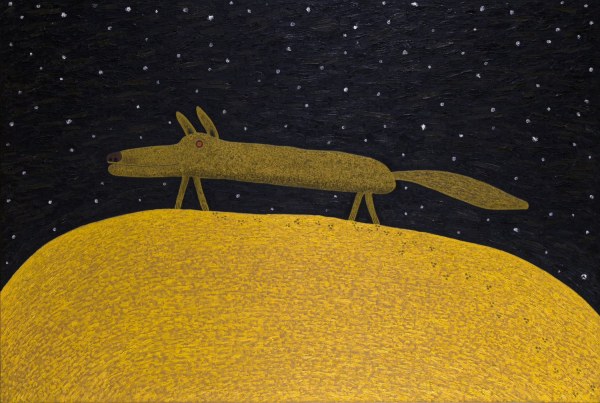
71. DEAN BOWEN
(B.1957)DOG ON SAND DUNE
Signed and titled verso
Oil on linen
122 x 183cm
Estimate: $5,000/$7,000
Absentee/Telephone bidding closes in loading...
Choose your bid below. We’ll ask you to sign in before submission.
Absentee Bid
Enter the maximum amount you authorise the auctioneer to bid up to on your behalf. This amount does not include buyer’s premium of 18% plus GST (19.8% including GST).
Telephone Bid
Request a GFL Fine Art staff member to telephone you during the auction so you can bid live by phone.
Approximate scale
Artwork approx. 122.0 x 183.0 cm

Visual guide only. Framed size is used when available; otherwise artwork size is shown.
About this artwork
Dean Bowen was born in Maryborough in 1957 and having decided at an early age to become an artist, Bowen moved to Melbourne in 1974 to study art. He received a Diploma in Fine Arts from RMIT in 1976, a Master of Arts in 1993 and a PhD from Monash University in 1999. He has exhibited extensively throughout Australia and internationally, including in Paris, London, Japan, Germany, Poland, Egypt and Switzerland. Read full essay Show less
Dean Bowen was born in Maryborough in 1957 and having decided at an early age to become an artist, Bowen moved to Melbourne in 1974 to study art. He received a Diploma in Fine Arts from RMIT in 1976, a Master of Arts in 1993 and a PhD from Monash University in 1999. He has exhibited extensively throughout Australia and internationally, including in Paris, London, Japan, Germany, Poland, Egypt and Switzerland.
Bowen is renowned for his playful imagery and his cultivated larrikin persona. There is something immediately engaging about his work: figures are reduced to deceptively simple forms, often with an almost childlike directness and a generous sense of humour. It is easy to look at a Bowen painting, enjoy its wit and move on.
But to do so is to miss much of what makes the work so compelling.
The paintings reveal themselves slowly, particularly when seen in the flesh. What initially appears naïve is, in fact, remarkably considered. Bowen has an acute understanding of paint and surface, and it is here that the sophistication of his work becomes apparent. His brushstrokes are controlled, his textures carefully developed, and the seemingly effortless quality of the finished image is the result of considerable discipline and restraint.
This is perhaps the great contradiction in Bowen's work. The imagery appears carefree, while the making of the painting is anything but. There is a lightness to the subject matter and a mischievous quality to the artist's persona, yet beneath this lies a painter who is deeply attentive to the physical qualities of paint. Layers are built; surfaces are worked and then restrained; passages are allowed to communicate while others are deliberately held back.
The result is a painting that rewards looking beyond the first impression. From a distance, the image catches the eye through its simplicity and humour. Up close, the surface tells another story. The texture, brushwork and subtle variations in the paint reveal the time, patience and decisions concealed beneath the apparent ease of the image.
Perhaps this is Bowen's most appealing sleight of hand. His paintings do not announce their sophistication. They invite us in through humour, familiarity and apparent simplicity, and only gradually reveal the skill and restraint that underpin them.
They may look effortless.
They are not.