
Spring 2026 Art Auction Tuesday 17th November 2026 at 6.00pm WST
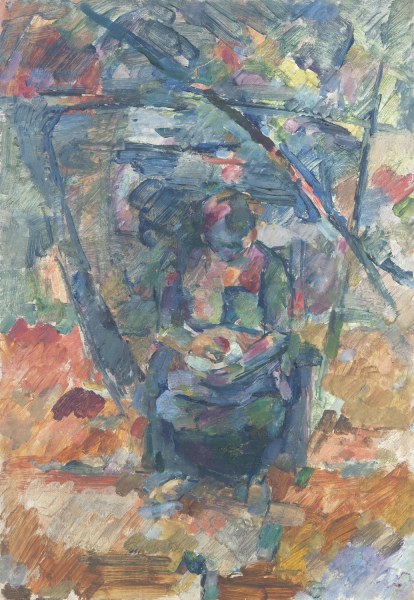
37. JOHN RICHARD PASSMORE
(1904-1984)WOMAN SEATED IN THE GARDEN c.1950
Oil on board
41.5 x 28.5cm
Estimate: $4,000/$6,000
Absentee/Telephone bidding closes in loading...
Choose your bid below. We’ll ask you to sign in before submission.
Absentee Bid
Enter the maximum amount you authorise the auctioneer to bid up to on your behalf. This amount does not include buyer’s premium of 18% plus GST (19.8% including GST).
Telephone Bid
Request a GFL Fine Art staff member to telephone you during the auction so you can bid live by phone.
Approximate scale
Framed approx. 51.0 x 38.0 x 3.0 cm

Visual guide only. Framed size is used when available; otherwise artwork size is shown.
About this artwork
In 1959, Passmore was awarded the prestigious Helena Rubinstein Travelling Art Scholarship. He seized the opportunity to return to Europe for twelve months, immersing himself once again in the art and culture of the continent. Tragically, he became ill during his travels. Following his return to Sydney in 1960, he gradually withdrew from public life and from the artistic world around him. He resigned from East Sydney Technical College in 1962 and spent the final two decades of his life living as a recluse in Rushcutters Bay. It is reputed that he destroyed many of the paintings he produced during this period, making works dating beyond 1962 exceptionally rare. Read full essay Show less
In 1959, Passmore was awarded the prestigious Helena Rubinstein Travelling Art Scholarship. He seized the opportunity to return to Europe for twelve months, immersing himself once again in the art and culture of the continent. Tragically, he became ill during his travels. Following his return to Sydney in 1960, he gradually withdrew from public life and from the artistic world around him. He resigned from East Sydney Technical College in 1962 and spent the final two decades of his life living as a recluse in Rushcutters Bay. It is reputed that he destroyed many of the paintings he produced during this period, making works dating beyond 1962 exceptionally rare.
Woman in the Garden is an early and compelling example of Passmore’s fascination with the work of Paul Cézanne. Rather than describing the garden in a conventional or immediately accessible way, Passmore constructs the scene through shifting patches of colour, allowing forms to emerge and recede within the landscape.
The woman is almost concealed by her surroundings and discovering her becomes part of the experience of looking. Passmore invites the viewer to slow down, search the surface and gradually uncover the relationships between figure, foliage, colour and space. The longer one looks, the more the painting reveals itself. What initially appears to be a unified mass of colour begins to open into a complex and absorbing world.
This quality of discovery is central to Passmore’s art. He was less interested in simply depicting what was before him than in transforming it into an experience for the viewer — encouraging us to look, explore and become completely engrossed in the painting.
John Passmore was one of Australia’s most gifted and individual artists, devoting his life almost entirely to his art. For him, painting was not simply a profession but a consuming purpose. His significance was recognised in 1985 with a major retrospective at the Art Gallery of New South Wales, and his work is held in major public collections throughout Australia.