
Spring 2026 Art Auction Tuesday 17th November 2026 at 6.00pm WST
More images
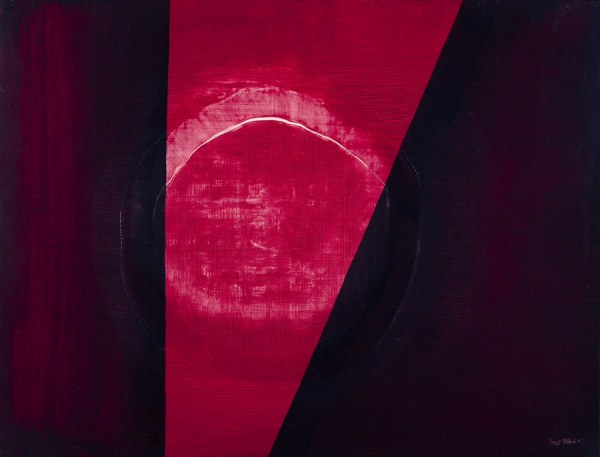
48. ERNEST SIDNEY PHILPOT
(1906-1985)UNTITLED
Signed and dated 67 lower right
Oil on board
71 x 91cm
Estimate: $4,000/$6,000
Absentee/Telephone bidding closes in loading...
Choose your bid below. We’ll ask you to sign in before submission.
Absentee Bid
Enter the maximum amount you authorise the auctioneer to bid up to on your behalf. This amount does not include buyer’s premium of 18% plus GST (19.8% including GST).
Telephone Bid
Request a GFL Fine Art staff member to telephone you during the auction so you can bid live by phone.
Approximate scale
Framed approx. 74.5 x 94.5 x 4.0 cm

Visual guide only. Framed size is used when available; otherwise artwork size is shown.
About this artwork
Ernest Philpot had three characteristics that rarely helped an artist’s reputation: Read full essay Show less
Ernest Philpot had three characteristics that rarely helped an artist’s reputation:
he was financially independent;
he was personally reserved; and
he was working ahead of local taste.
Each of these could diminish an artist’s visibility. Combined, they made it possible for Philpot to become influential without becoming widely known.
Philpot’s financial independence gave him the freedom to pursue an uncompromising artistic vision without being constrained by commercial considerations. Ironically, that same independence may have contributed to his low public profile. Untethered from the art market and seemingly unconcerned with cultivating popular approval, he devoted his energies primarily to the work itself, leaving others to recognise—or overlook—the significance of his achievements.
When Philpot first moved into abstraction, he titled his early non-objective works My First Painting, My Second Painting, and so on. These titles offer a rare insight into his thinking. They were not a denial of the decades he had already spent painting, but rather an acknowledgement that he had arrived at a form of expression he regarded as entirely his own. The years devoted to realism, surrealism and other styles had, in his mind, been a kind of apprenticeship. Only when he discovered a visual language capable of expressing his deepest artistic convictions did he feel that he had truly begun.
Philpot’s financial independence gave him the freedom to pursue an uncompromising artistic vision without being constrained by commercial considerations. That independence may also have contributed to his low public profile. Rather than cultivating the art market or seeking popularity for its own sake, he devoted his energies primarily to developing his work on his own terms. This did not mean that he was indifferent to recognition or to finding an audience; rather, he appears to have wanted his work to be understood on its own terms, even if that meant working outside prevailing tastes.
Philpot’s work was included in the exhibition Six Western Australian Artists, held at the Commonwealth Institute in London in 1959. His participation in the exhibition provided an opportunity to present his work to an audience beyond Western Australia. He subsequently sought to extend that opportunity by holding a solo exhibition in London during the winter of 1960–61. Also held at the Commonwealth Institute in Kensington, the exhibition presented a retrospective of his work from 1930 to 1960, bringing together his early traditional paintings with works that charted his gradual movement towards abstraction.
His second London exhibition followed in 1967, after he had decided to spend more time in what he regarded as the “heart of the art world”. He lived in London for 18 months from 1966, hoping to establish himself within its artistic environment. Reflecting on the decision, he later wrote: “I had to do this for myself, for one reason or another I had at no time attracted the attention of a sponsor or promoter.”
Philpot returned to Australia disappointed that the London art world was not what he had imagined. In his view, commercialism had assumed too great a role, while spiritual concerns had little place within the prevailing art establishment. Yet his experience did not diminish his confidence in the direction he had chosen. On his return to Perth, he continued to develop his work according to his own convictions, largely indifferent to prevailing fashions or commercial expectations.
Ernest Sidney Philpot’s artistic legacy endures through his pioneering contribution to abstract art in Western Australia and his determination to pursue an artistic language of his own. His works are now held in significant collections, including those of the Art Gallery of Western Australia, the University of Western Australia and the National Gallery of Australia, as well as in regional and private collections throughout Australia. A retrospective exhibition of his work was held at the Undercroft Gallery at the University of Western Australia in 1988.